Flagship case study
AutoMatch
A car marketplace where recommendations end in real inventory.
One connected buying journey
01 / Overview
A marketplace designed around the decision, not only the listing.
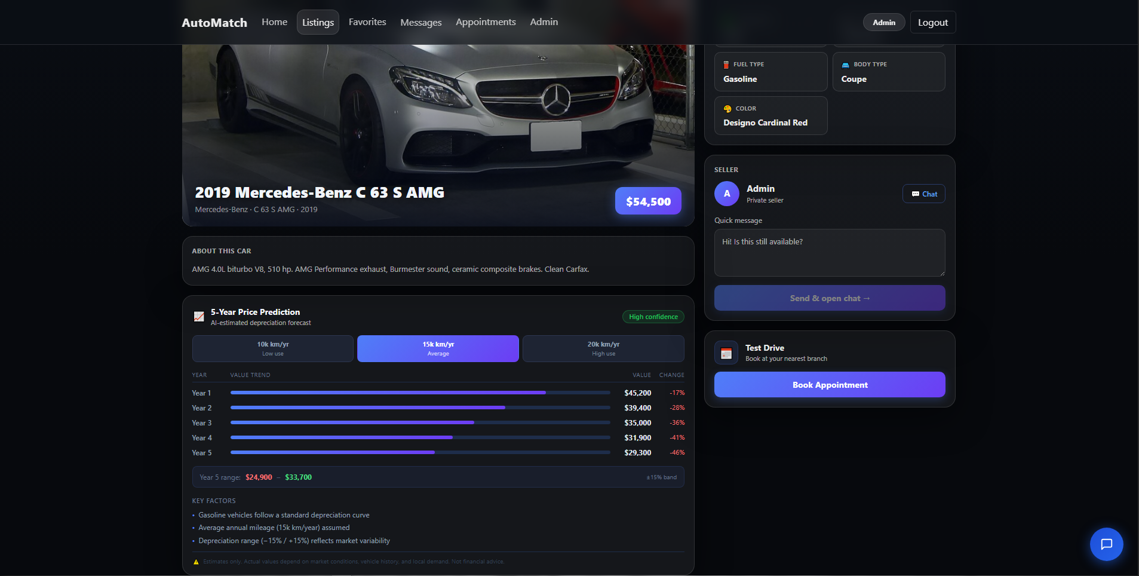
A team-built final-year project connecting vehicle discovery, messaging, appointments, administration, AI-assisted matching, and price prediction in one marketplace.
The problem
Used-car discovery is fragmented. Browsing, valuation, seller communication, appointments, and the operational work behind a marketplace often live in separate tools.
Our response
We treated those steps as one connected product. A buyer can move from a need to an available vehicle, then continue into the conversations and appointments required to act on that decision.
02 / Contribution
Following the buyer’s next question through the system.
I contributed across the marketplace and admin flows, the inventory-grounded chatbot, and the vehicle price-prediction integration.
- 01
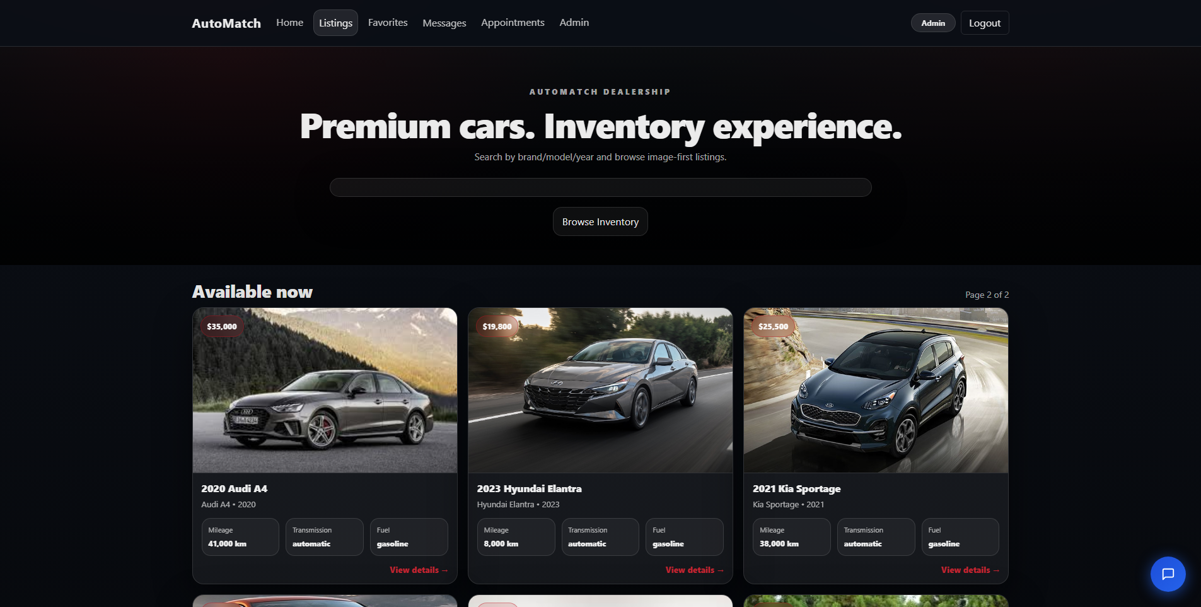
Vehicle listings, favorites, buyer-seller messaging, reports, and appointment booking
- 02
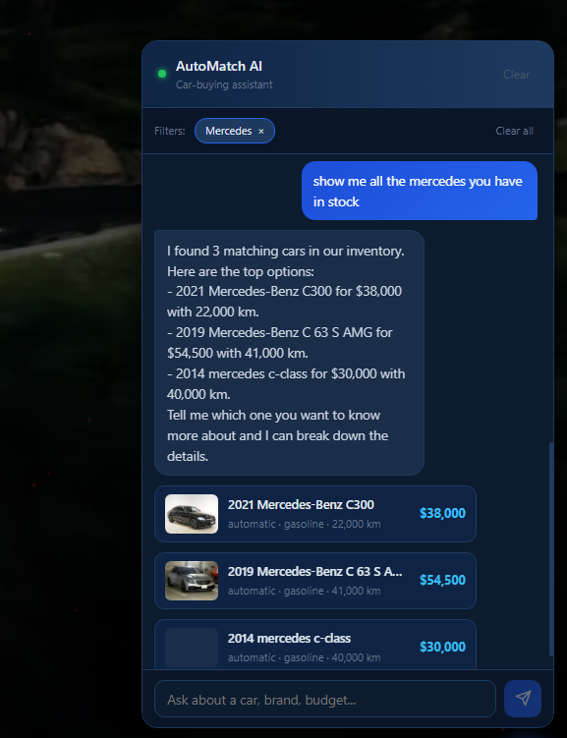
A chatbot that interprets buyer needs and recommends vehicles from active inventory
- 03
Current-price estimates and five-year value forecasts based on vehicle data
- 04
Listing approval, inventory management, sales tracking, and profit reporting
- 05
Branch and staff appointment administration
Inventory-grounded assistance
The conversation ends in cars a buyer can actually open.
The assistant interprets a natural-language request, applies a useful filter, and returns matching vehicles with prices and listing context instead of inventing a generic answer.
03 / Architecture
A marketplace core with a focused machine-learning boundary.
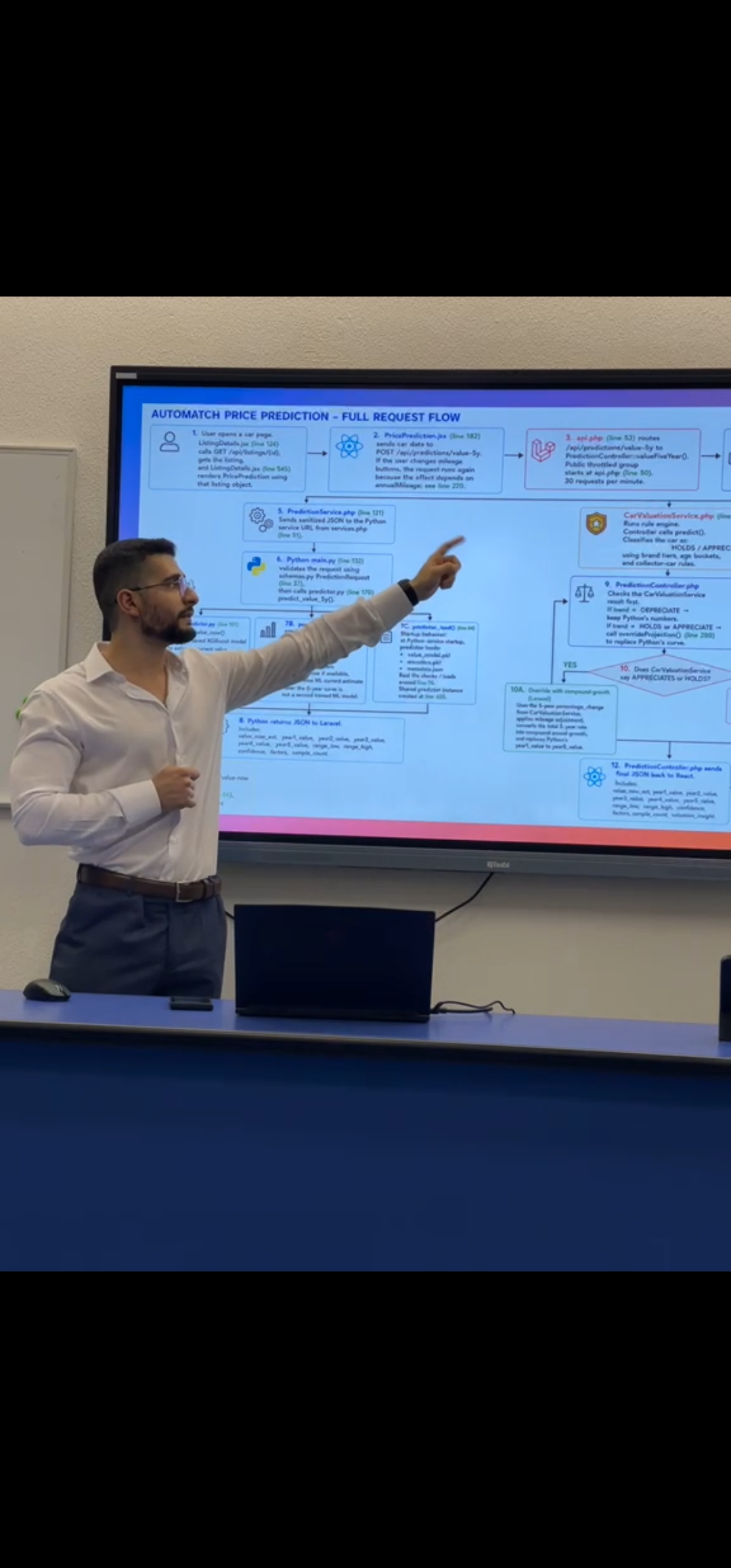
The web product owns users, inventory, communication, and operations. The Python service stays focused on valuation requests.
- 01React
Marketplace and administration interfaces
- 02Laravel
Domain logic, authentication, messaging, and appointments
- 03MySQL
Users, vehicles, listings, and operational records
- 04FastAPI
HTTP boundary for valuation requests
- 05XGBoost
Vehicle price estimation and forecast flow
- Laravel 12
- React 19
- MySQL
- Python
- FastAPI
- XGBoost
- Laravel Sanctum
- Ollama
- Gemini
04 / Operations
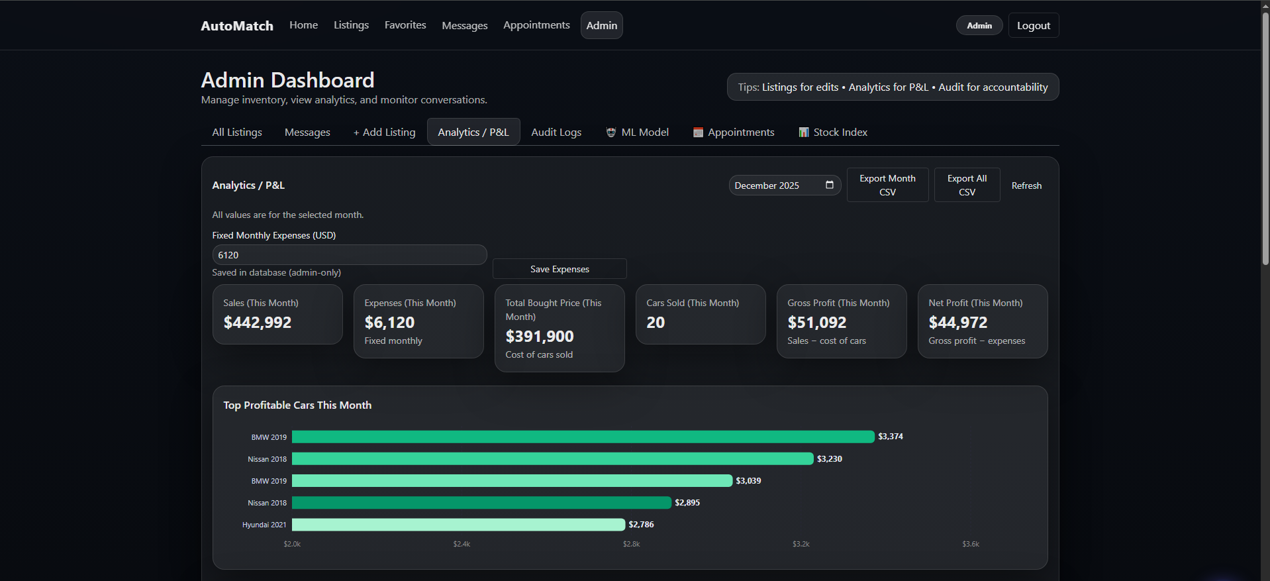
The storefront had an operational backbone.
Inventory, sales, appointments, audit trails, and reporting were treated as part of the product—not as an afterthought behind the demo.
05 / Reflection
The hard part was keeping every layer connected.
There are no invented launch metrics here. The useful proof is the breadth of the working system, the decisions behind it, and what I would test next.
Challenges
- 01
Keeping conversational recommendations grounded in vehicles that actually exist in the marketplace
- 02
Coordinating marketplace workflows with a separate Python machine-learning service
- 03
Designing the operational tools behind the storefront, not only the buyer-facing interface
What I learned
- 01
An AI feature is only useful when its output connects cleanly to the rest of the product.
- 02
The admin experience, data model, and service boundaries shape the customer experience just as much as the visible interface.